
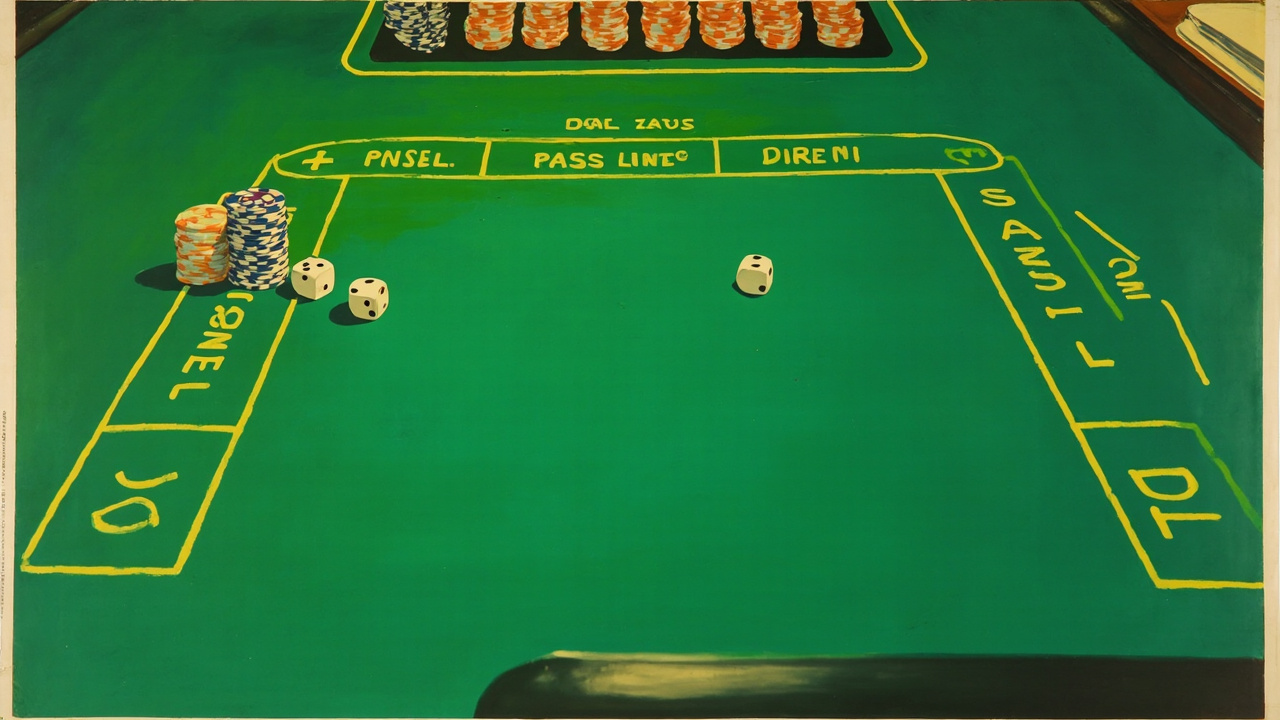
Craps pass line bet explained simply means the shooter must roll a 7 or 11 to win immediately, while a 2, 3, or 12 loses outright. Many Australians reckon the table looks busy as a hive at first, but the core wager stays straightforward once you ignore the side bets. If the come-out roll lands on 4, 5, 6, 8, 9, or 10, that number becomes the point, and the shooter must hit it again before a 7 appears. You can extend that base action with odds later, which shifts the house edge in your favour compared to most side propositions. For locals eyeing a Saturday arvo session, the pass line offers a slower pace than chasing proposition bets, and that matters when you want to stretch a bankroll across a few hours rather than burn through it in one noisy rush.
How the Pass Line Actually Works
The come-out roll sets the whole rhythm, and you win straight away on 7 or 11 while 2, 3, or 12 hands the house the round. Once a point number lands, the table locks into a different phase where the shooter keeps rolling until that point repeats or a 7 turns up. That structure matters because the payout stays fixed at even money, so the real decision sits in whether you add odds behind the line once the point is established. When I’ve mapped lifecycle journeys for membership programmes across APAC, I’ve seen the same pattern repeat: people who chase extra bells and whistles usually bleed value faster than those who stick to the core offer and let the odds do the heavy lifting. The pass line keeps you in the round without piling on extra house edge, which is why seasoned players treat it as the anchor rather than the main event. elvis-frog-trueways-online-au.com
Why the Odds Bet Changes the Math
Taking odds behind the line doesn’t pay out at the same rate as the pass line itself, but it carries zero house edge, which is the only real lever most players get on a standard table. The payout scales with the point number because a 4 or 10 pays 2 to 1, a 5 or 9 pays 3 to 2, and a 6 or 8 pays 6 to 5. That means a $20 pass line wager with $20 in odds on a 6 or 8 returns $32 if the point hits, not $40, so the maths only works if you actually size the odds to match the point rather than dumping a flat stack across every number. Archie Jackson, Head of Operator Partnerships, Flinders Interactive Group, has noted that players who ignore the odds tier and treat every point the same usually miss the whole point of the bet, which is a fair caveat when you’re trying to keep the edge as low as it goes. If you’re comparing that to a bonus structure that locks you into a single contribution rate, the odds bet is closer to a flexible loyalty reward that actually pays out on the numbers that matter.
What This Means for Australians
For Hobart punters, the practical takeaway is that the pass line suits a measured session more than a fast grind, especially when you’re playing locally or watching a live table on a quiet weeknight. The even-money base bet means your swings stay visible, and the odds option lets you adjust exposure without changing the underlying rule set. You still need to treat any welcome offer as a separate layer with its own wagering and contribution rules, because a bonus that pays out only on slots won’t help a table game session no matter how generous the headline looks. No worries if the table feels loud at first; the pass line keeps you in the round without forcing you into proposition bets that shift the maths against you. If you want to compare live dealer options or check how a local operator structures its table access, you can start from elvis-frog-trueways-online-au.com and work out whether the table limits and payout structure match your own session plan.
When the Pass Line Fits Your Session
The pass line works best when you want a bet that follows a clear rule set rather than a fast-moving prop that asks you to guess every roll. It suits players who prefer a slower cadence, because the point phase gives you time to watch the table, size your odds, and decide whether the current rhythm matches your bankroll plan. If you’re used to membership-style campaigns where the value sits in a recurring reward rather than a one-off flash deal, the pass line feels familiar: the base bet gets you in, and the odds are the part that actually improves the long-term maths. That’s the angle that matters most when you’re weighing a table bet against a bonus that looks bigger on paper but pays out only on a narrow set of games.

The pass line keeps the house edge low on the base wager and gives you a real way to trim that edge further with odds, so it suits a measured session more than a fast grind. Treat any welcome offer as a separate layer with its own wagering and contribution rules, and don’t let a flashy headline distract you from the actual table maths. If you want a bet that stays readable across a few hours in Hobart or a quiet session online, the pass line is the one that rewards patience rather than speed.