
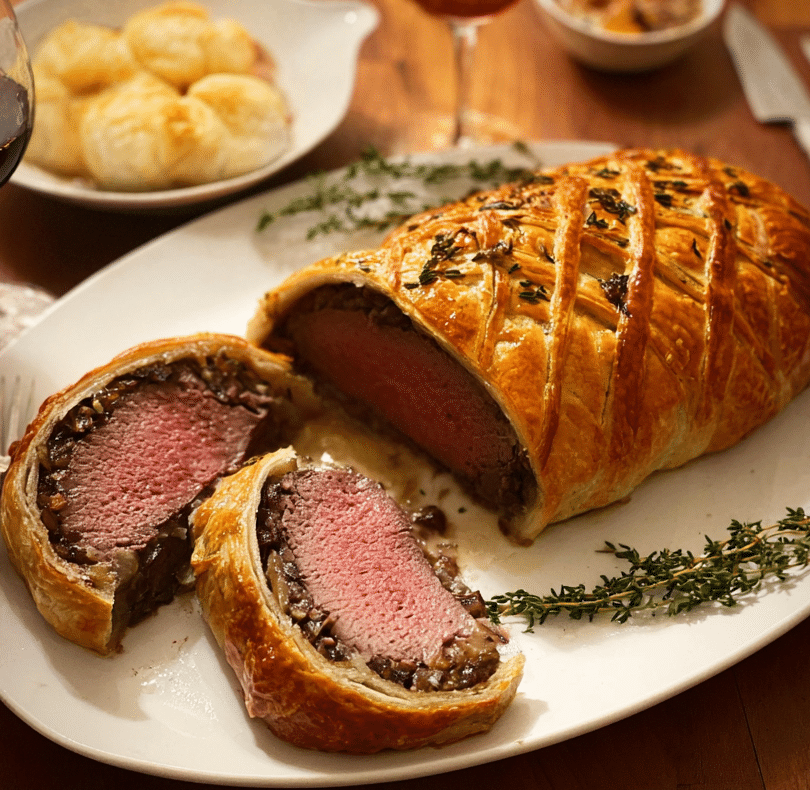
Beef Wellington Holiday preparations can feel overwhelming—what if the pastry gets soggy? What if the beef is overcooked? I’m Lisa from Recipesrealm, and I completely understand these concerns. Years ago, during my first attempt at hosting Christmas dinner, I served a Beef Wellington that looked beautiful but had a disappointingly soggy bottom and unevenly cooked meat. My guests were gracious, but I was determined to master this iconic dish. After countless trials, adjustments, and even a few tears, I’ve perfected a foolproof Beef Wellington Holiday recipe that delivers a golden, flaky crust with perfectly medium-rare beef every single time.
This Beef Wellington Holiday recipe promises restaurant-quality results in your home kitchen—tender, juicy beef tenderloin wrapped in savory mushroom duxelles and encased in buttery, golden puff pastry. As someone who has made this dish for over a dozen holiday celebrations at Recipesrealm, I’ve discovered the secrets to preventing soggy pastry, achieving the perfect doneness, and presenting a show-stopping
centerpiece that will have your guests asking for seconds. In this comprehensive guide, I’ll walk you through selecting the best beef cut, preparing the essential components, mastering the cooking technique, and troubleshooting common issues. You’ll also find pro tips for make-ahead preparation, flavor variations to suit different preferences, and answers to frequently asked questions.
Why This Beef Wellington Holiday Recipe Works
This Beef Wellington Holiday recipe has become a staple at Recipesrealm because it addresses all the common challenges home cooks face with this classic dish while delivering spectacular results:
- Uses premium yet accessible ingredients: Quality beef tenderloin is the star, but you don’t need to source rare or exotic components—everything is available at your local grocery store or butcher
- Features a moisture barrier technique: The crêpe layer prevents the mushroom duxelles from making the pastry soggy, ensuring a crispy, golden crust every time
- Incorporates foolproof temperature guidance: Precise internal temperature targets and resting times guarantee perfectly cooked beef from edge to center
- Allows advance preparation: Most components can be prepared a day ahead, making holiday entertaining significantly less stressful
- Scales beautifully for gatherings: Whether you’re serving 4 or 12 guests, this recipe adapts seamlessly to individual portions or an impressive whole roast
- Delivers impressive presentation with manageable effort: The stunning appearance makes it perfect for special occasions, yet the step-by-step method is approachable for home cooks
Choosing the Right Meat for Beef Wellington Holiday
Selecting the proper cut and quality of beef is absolutely critical to Beef Wellington Holiday success. The wrong choice can result in tough, chewy, or flavorless results.
Best Cuts for This Beef Wellington Holiday Recipe
The center-cut beef tenderloin (also called filet mignon when cut into steaks) is the only appropriate choice for authentic Beef Wellington. This cut works perfectly because it features minimal connective tissue, remains incredibly tender with short cooking times, maintains a uniform cylindrical shape for even cooking and elegant presentation, and has a mild flavor that pairs beautifully with the rich mushroom and pastry components.
When purchasing, request a 2 to 2.5-pound center-cut tenderloin from your butcher. This size serves 6-8 people generously. The center cut is crucial—avoid the tapered ends which cook unevenly. Ask your butcher to trim the silver skin (the tough, silvery membrane) and any excess fat, though a light trim is preferable as some fat adds flavor during searing.
Buying Tips for Your Beef Wellington Holiday
Look for beef that displays a deep red to burgundy color with fine marbling throughout. Avoid meat with brown or gray patches, which indicate age. The texture should be firm to the touch, not mushy or slimy. For the best Beef Wellington Holiday experience, choose USDA Prime or Choice grade—Prime offers the most marbling and tenderness, while Choice provides excellent quality at a more accessible price point.
Building a relationship with a trusted butcher pays dividends for this recipe. They can custom-cut your tenderloin to the exact weight and shape you need, remove the silver skin expertly, and even advise you on the best available beef that week. If shopping at a standard grocery store, visit the meat counter rather than selecting pre-packaged options—the butchers can prepare your tenderloin properly.
Consider dry-aged beef if available and within budget. Dry-aging concentrates flavors and tenderizes the meat further, creating an even more luxurious Beef Wellington Holiday experience. A 21-28 day dry-age provides optimal results without becoming overpowering.
Substitutions for Your Beef Wellington Holiday
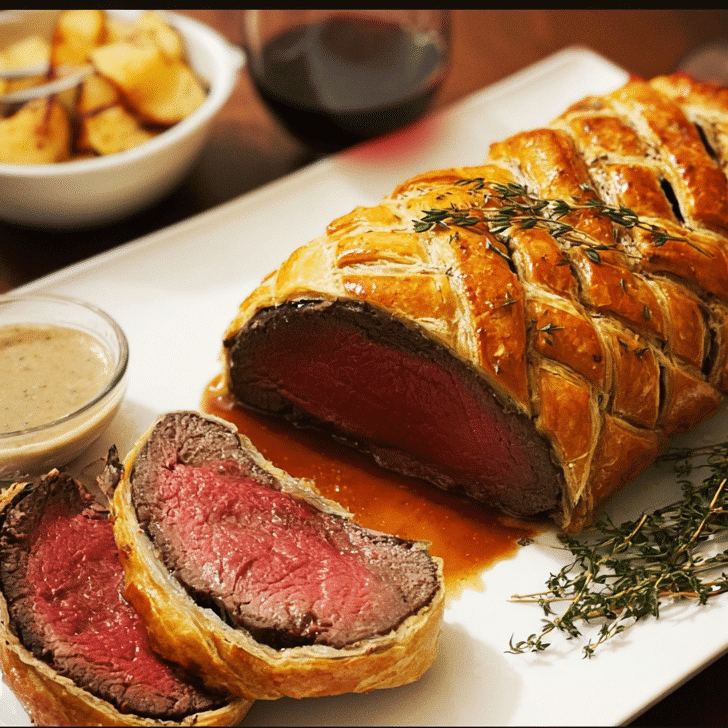
While traditional Beef Wellington uses beef tenderloin exclusively, you can adapt this technique for different proteins. Venison loin makes an elegant substitution for a gamier flavor profile that’s perfect for adventurous holiday guests. The cooking method remains identical, though venison is leaner and benefits from careful temperature monitoring to prevent drying.
For a more budget-friendly option, consider making individual Beef Wellington portions using filet mignon medallions (4-6 ounces each). This approach offers better cost control, ensures consistent doneness across all servings, and creates elegant plated presentations. The mushroom duxelles and pastry quantities remain the same; simply divide them among individual portions.
Ingredients & Prep for Beef Wellington Holiday
Meat Prep Essentials for Beef Wellington Holiday
Proper beef preparation is non-negotiable for Beef Wellington Holiday success. Begin by patting the tenderloin completely dry with paper towels—any surface moisture will create steam during searing, preventing proper browning. Season generously with kosher salt and freshly cracked black pepper on all sides. Allow the seasoned beef to sit at room temperature for 45-60 minutes before cooking; this ensures even cooking throughout the roast.
If your butcher hasn’t removed the silver skin, you must do this yourself. Using a sharp boning knife, slide the blade under the silver skin at one end, angling slightly upward. Hold the membrane taut with your other hand and slice it away in long strokes. Remove any large pockets of fat, but leave thin layers as they add flavor.
For optimal texture, consider dry-brining your tenderloin 24 hours in advance. Simply salt the beef generously, place it uncovered on a wire rack over a baking sheet, and refrigerate. This process seasons the meat deeply and helps create a better crust when searing.
Key Ingredients List for Beef Wellington Holiday
For the Beef:
- 2 to 2.5 pounds center-cut beef tenderloin, trimmed
- 2 tablespoons high-smoke-point oil (grapeseed or avocado)
- 2 teaspoons kosher salt
- 1 teaspoon freshly ground black pepper
For the Mushroom Duxelles:
- 1.5 pounds mixed mushrooms (cremini, shiitake, and oyster), finely chopped
- 3 tablespoons unsalted butter
- 2 large shallots, minced
- 4 cloves garlic, minced
- 2 tablespoons fresh thyme leaves
- 1/4 cup dry sherry (substitute with beef broth if needed)
- Salt and pepper to taste
For Assembly:
- 8-10 thin crêpes (homemade or store-bought)
- 8 ounces pâté de foie gras or mushroom pâté
- 1 pound all-butter puff pastry, thawed
- 2 egg yolks beaten with 1 tablespoon water (egg wash)
- Flaky sea salt for finishing
For the Sauce:
- 2 cups beef stock
- 1/2 cup demi-glace
- 2 tablespoons unsalted butter
- Fresh thyme sprigs
- Salt and pepper to taste
Marinating and Preparation Timeline for Beef Wellington Holiday
This Beef Wellington Holiday recipe benefits enormously from advance preparation. Here’s the optimal timeline:
24 Hours Before:
- Dry-brine the beef tenderloin
- Prepare and cook the mushroom duxelles
- Make crêpes if preparing from scratch
4-6 Hours Before:
- Remove beef from refrigerator to reach room temperature
- Sear the beef and cool completely
- Assemble the Wellington and wrap tightly
- Refrigerate wrapped Wellington
1 Hour Before Serving:
- Remove Wellington from refrigerator
- Preheat oven
- Apply egg wash
During Cooking:
- Prepare the sauce
- Rest the Wellington after baking
This staggered approach prevents last-minute stress and actually improves results, as the chilled, assembled Wellington holds its shape better during baking.
Step-by-Step Cooking Instructions for Beef Wellington Holiday
Pre-Cooking Prep for Beef Wellington Holiday
Begin your Beef Wellington Holiday preparation by ensuring all components are ready. Remove your beef tenderloin from the refrigerator 45-60 minutes before cooking. Pat it completely dry with paper towels—this is crucial for proper searing. Season generously on all sides with kosher salt and freshly ground black pepper.
Prepare your mushroom duxelles first, as it needs to cool completely before assembly. Finely chop your mushrooms—using a food processor works well, but pulse carefully to avoid creating a paste. Heat a large skillet over medium-high heat and add butter. Once foaming, add the shallots and cook until softened,
about 3 minutes. Add garlic and thyme, cooking for another minute until fragrant. Add the mushrooms in batches if necessary, allowing moisture to evaporate between additions. Cook, stirring occasionally, until the mixture is very dry and paste-like, approximately 15-20 minutes. Deglaze with sherry, cooking until completely evaporated. Season with salt and pepper, then spread on a baking sheet to cool completely.
Lay out your crêpes on a large sheet of plastic wrap, overlapping them slightly to create a rectangle large enough to wrap your beef. Spread a thin, even layer of pâté over the crêpes, then spread the cooled mushroom duxelles over the pâté in an even layer.
Cooking Method for Beef Wellington Holiday
Heat a large cast-iron or heavy-bottomed skillet over high heat until smoking. Add high-smoke-point oil and carefully place your seasoned tenderloin in the pan. Sear for 90 seconds on each side, including the ends, until deeply browned all over. This creates flavor and a barrier that helps retain juices. Transfer immediately to a wire rack and allow to cool to room temperature, then refrigerate for at least 30 minutes—the beef must be completely cold before wrapping to prevent the pastry from melting.
Once the beef is cold, place it on the prepared crêpe rectangle. Using the plastic wrap as a guide, tightly roll the crêpes and mushroom mixture around the beef, creating a tight cylinder. Twist the ends of the plastic wrap to secure and refrigerate for 15-30 minutes to firm up.
Roll out your puff pastry on a lightly floured surface to a rectangle about 1/4-inch thick and large enough to completely enclose your beef. Remove the beef from the plastic wrap and place it seam-side down in the center of the pastry. Brush the edges of the pastry with egg wash. Fold the pastry over the beef, trimming any excess and pressing the edges to seal. Fold the ends like wrapping a present, ensuring there are no air pockets. Place seam-side down on a parchment-lined baking sheet.
Brush the entire surface with egg wash, being careful not to let it drip down the sides (which prevents rising). Using a sharp knife, score the top with shallow decorative lines (avoid cutting through the pastry). Cut small vents to allow steam to escape. Refrigerate for at least 30 minutes or up to 24 hours—this rest helps the pastry achieve maximum flakiness.
Preheat your oven to 425°F (220°C). Remove the Wellington from the refrigerator and apply a second coat of egg wash. Sprinkle with flaky sea salt. Bake for 20-25 minutes until the pastry is deep golden brown. Reduce temperature to 400°F (200°C) and continue baking for 15-20 minutes.
Doneness Check for Beef Wellington Holiday
Achieving the perfect internal temperature is crucial for your Beef Wellington Holiday. Insert an instant-read thermometer through one end of the Wellington into the center of the beef. For medium-rare (ideal for tenderloin), you’re targeting 120-125°F. For medium, aim for 130-135°F. Remember that the temperature will rise 5-10 degrees during resting.
Visual cues also help: the pastry should be uniformly deep golden brown, and if you’ve cut vents in the top, you might see some steam escaping. If the pastry is browning too quickly but the beef hasn’t reached temperature, tent loosely with foil and reduce oven temperature slightly.
Resting Your Beef Wellington Holiday
This step is absolutely critical—do not skip it! Transfer your Beef Wellington Holiday to a cutting board and let it rest for 10-15 minutes before slicing. This resting period allows the juices, which have been driven to the center during cooking, to redistribute throughout the meat. Cutting too early results in juice running out onto the board, leaving you with dry beef.
During this rest time, finish your sauce. The Wellington’s internal temperature will continue rising (carryover cooking), moving it from medium-rare toward medium. Plan accordingly when determining your target temperature.
Pro Tips for Perfect Beef Wellington Holiday
Avoiding Tough or Dry Meat in Beef Wellington Holiday
The most common mistake with Beef Wellington Holiday is overcooking the beef. Use a reliable instant-read thermometer—don’t rely on timing alone, as oven temperatures vary. Remove the Wellington when the internal temperature is 5 degrees below your target, accounting for carryover cooking.
Ensure your beef is completely cold before wrapping in pastry. If the beef is even slightly warm, it will begin cooking inside the pastry before the pastry browns, leading to overcooked meat. The crêpe layer is your insurance policy against soggy pastry—it creates a barrier between the moisture-rich duxelles and the pastry. Never skip this layer.
Don’t overwork or compress the beef when wrapping. Maintain its natural shape and wrap snugly but not tightly. Baste the beef during its initial sear to develop flavor, but avoid adding extra fat inside the Wellington, which can make the pastry greasy.
Essential Tool Recommendations for Beef Wellington Holiday
Invest in a quality instant-read thermometer—this is non-negotiable for perfect Beef Wellington Holiday results. The Thermapen or similar professional-grade thermometer provides accurate readings in seconds. A heavy cast-iron skillet ensures even, intense heat for proper searing. The thermal mass of cast iron maintains temperature when cold beef hits the pan.
A sharp chef’s knife makes precise cutting of the finished Wellington possible without crushing the pastry. Use a rolling pin with thickness guides to ensure even pastry rolling. A wire cooling rack is essential for properly cooling the seared beef and resting the finished dish.
Consider kitchen twine for tying the tenderloin into a uniform shape before searing, which promotes even cooking. Parchment paper prevents sticking and makes cleanup effortless.
Storage and Reheating Your Beef Wellington Holiday
Beef Wellington Holiday is best served immediately, but you can prepare it up to 24 hours in advance. Assemble completely, wrap tightly in plastic wrap, and refrigerate. Apply egg wash just before baking—never apply it in advance as it becomes gummy.
Leftover Wellington can be stored wrapped in foil in the refrigerator for up to 3 days. Reheat individual slices in a 350°F oven for 10-15 minutes until warmed through. The pastry won’t be as crispy as when fresh, but gentle oven heating preserves texture better than microwaving.
Freezing assembled, unbaked Wellington is possible but not ideal. The pastry texture suffers, and thawing requires careful planning. If you must freeze, wrap tightly in plastic wrap, then foil, and freeze for up to 1 month. Thaw overnight in the refrigerator before baking, adding 5-10 minutes to the cooking time.
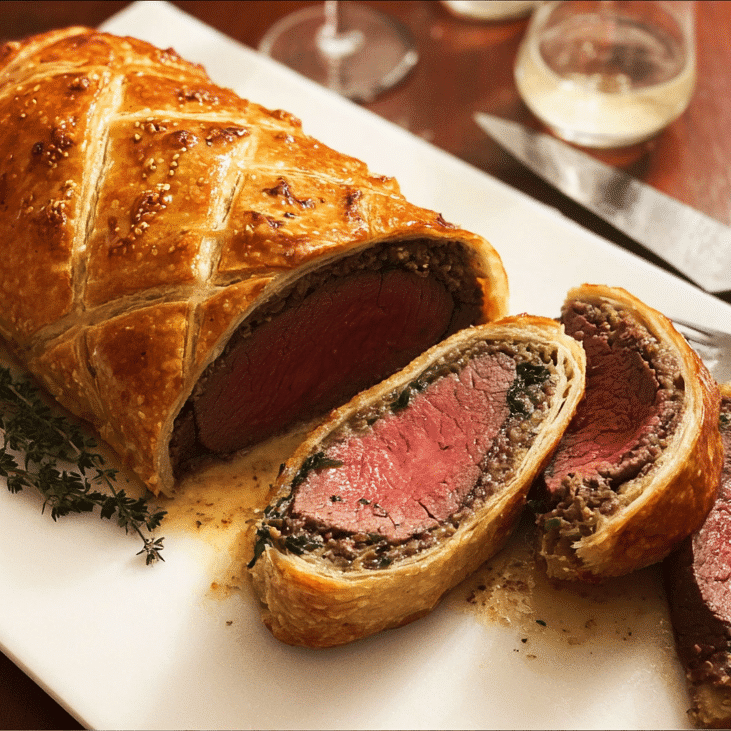
Flavor Variations for Beef Wellington Holiday
Spicy Twist on Beef Wellington Holiday
Transform your Beef Wellington Holiday into an exciting, heat-forward dish by incorporating spicy elements. Add 2 tablespoons of finely minced jalapeño or 1 tablespoon of crushed red pepper flakes to your mushroom duxelles. For more complex heat, blend 2 tablespoons of Dijon mustard with 1 teaspoon of cayenne pepper and spread this over the beef before applying the duxelles layer.
Create a spicy compound butter by mixing softened butter with minced garlic, cayenne, and smoked paprika, then brush this over the pastry before the final egg wash. This creates a beautifully spiced, golden crust. Serve with a horseradish cream sauce that amplifies the heat while providing cooling contrast.
International Variations for Beef Wellington Holiday
Adapt your Beef Wellington Holiday with global flavors. For an Asian-inspired version, replace the traditional duxelles with a mixture of shiitake mushrooms, ginger, garlic, and a splash of soy sauce. Add a thin layer of miso paste under the duxelles for umami depth. Substitute the pâté with a layer of seasoned, sautéed bok choy or spinach mixed with sesame oil.
Create a Mediterranean Beef Wellington Holiday by using a mixture of sun-dried tomatoes, kalamata olives, and fresh basil in place of traditional duxelles. Add a layer of herb-crusted goat cheese for tangy richness. Brush the pastry with olive oil infused with rosemary and garlic instead of traditional egg wash.
For a French-inspired variation, add truffle oil to your duxelles and use black truffle pâté instead of foie gras. Finish with a rich Madeira or red wine reduction sauce studded with fresh truffle shavings.
Dietary Adaptations for Beef Wellington Holiday
| Variation | Modifications | Key Considerations |
|---|---|---|
| Keto-Friendly | Replace puff pastry with almond flour-based low-carb pastry; use cream cheese mixed with almond flour as binding | Reduce overall carb content to 8-10g per serving; maintain protein and healthy fat ratios |
| Gluten-Free | Use certified gluten-free puff pastry (available at specialty stores); ensure all other ingredients are gluten-free certified | Cross-contamination prevention is critical; verify stock and seasonings are gluten-free |
| Dairy-Free | Substitute butter with plant-based butter in duxelles; use dairy-free puff pastry; replace cream-based sauce with beef reduction | Check puff pastry ingredients carefully—many contain butter |
| Lower-Fat | Use leaner beef cuts (though this reduces tenderness); reduce butter in duxelles; skip pâté layer or use vegetable-based pâté | Results will be less rich but still delicious; compensate with bold herb flavoring |
| Individual Portions | Cut tenderloin into 6 oz medallions; divide duxelles and pastry accordingly | Reduces cooking time to 15-20 minutes; easier portion control; better for varied doneness preferences |
Serving Suggestions for Beef Wellington Holiday
Your Beef Wellington Holiday deserves equally impressive accompaniments. Classic pairings include creamy garlic mashed potatoes, which provide rich, comforting contrast to the elegant beef. Roasted root vegetables—carrots, parsnips, and baby turnips—glazed with honey and thyme offer earthy sweetness that complements the mushroom flavors.
Prepare haricots verts (French green beans) sautéed with shallots and toasted almonds for a crisp, fresh counterpoint. A simple arugula salad dressed with lemon vinaigrette and shaved Parmesan cuts through the richness beautifully. For a more substantial side, consider potato gratin or duchess potatoes, which add visual elegance to your presentation.
The sauce is crucial—a rich red wine reduction or classic bordelaise sauce enhances the beef without overwhelming it. Prepare this while the Wellington rests. Reduce beef stock with red wine, shallots, thyme, and a touch of butter, then strain for a glossy, restaurant-quality sauce.
For beverage pairings, Beef Wellington Holiday calls for full-bodied red wines. A Cabernet Sauvignon from Napa Valley offers bold tannins that stand up to the rich beef and pastry. Bordeaux blends provide elegant complexity that matches the dish’s sophistication. For a more budget-friendly option, a robust Côtes du Rhône or Argentine Malbec works beautifully. If serving guests who prefer white, choose a full-bodied, oaked Chardonnay.
FAQs About Beef Wellington Holiday
Can I use frozen beef for Beef Wellington Holiday?
While fresh beef is always preferable for Beef Wellington Holiday, high-quality frozen beef tenderloin can work if properly thawed. Never attempt to cook frozen beef—thaw completely in the refrigerator for 24-48 hours depending on size. Pat thoroughly dry before proceeding with the recipe, as frozen beef releases more moisture during thawing. The texture and flavor will be slightly compromised compared to fresh beef, but proper technique can still yield excellent results.
How do I fix overcooked Beef Wellington Holiday?
Unfortunately, overcooked beef cannot be “undone,” but you can make it more palatable. Slice the Wellington thinly—thinner slices are more tender and appear less dry. Serve with extra sauce, allowing guests to add as much as they like. The moisture from a rich reduction can help compensate for dryness. Consider slicing and serving the beef separately from the pastry rather than traditional Wellington slices, which helps hide the overcooking.
Prevention is key: always use an instant-read thermometer, remove the Wellington when it’s 5 degrees below your target temperature, and let it rest properly. Practice makes perfect—consider your first attempt a learning experience.
Can I prepare Beef Wellington Holiday completely in advance?
Absolutely! This is one of the recipe’s greatest advantages for holiday entertaining. Assemble your Beef Wellington Holiday completely, up to and including wrapping in pastry, then refrigerate for up to 24 hours before baking. Do not apply the egg wash until just before baking—apply it in two coats, once when you remove it from the refrigerator and again just before it enters the oven.
The mushroom duxelles can be prepared up to 3 days in advance and stored in an airtight container in the refrigerator. Seared beef can be prepared 1 day in advance. However, do not assemble the Wellington more than 24 hours ahead, as the pastry can become soggy despite the crêpe barrier.
Is Beef Wellington Holiday safe during pregnancy?
This depends on the beef’s internal temperature. Beef Wellington Holiday is traditionally served medium-rare (125-130°F internal temperature), which may not meet safety guidelines for pregnant women. The FDA recommends cooking all meat to at least 145°F for food safety during pregnancy.
If preparing for a pregnant guest, you have several options: cook the entire Wellington to 145°F (medium), though this reduces the dramatic pink center; prepare individual portions and cook one to a higher temperature; or slice the finished Wellington and briefly sear the pregnant guest’s portion to raise the temperature. Always consult with healthcare providers about dietary restrictions during pregnancy.
Why does my pastry get soggy?
Soggy pastry in Beef Wellington Holiday results from several possible mistakes. The most common is skipping the crêpe layer, which acts as a moisture barrier between the wet duxelles and the pastry. Always include this crucial element.
Other causes include: mushroom duxelles that wasn’t cooked down enough (it should be paste-like and very dry), wrapping warm beef instead of completely chilled beef, not allowing the assembled Wellington to rest in the refrigerator before baking, which helps the pastry firm up, or using low-quality puff pastry with insufficient butter content.
Ensure your duxelles is cooked until almost all moisture has evaporated—this takes longer than you think. The mixture should hold together when pressed. Cool completely before assembly, and never skip the refrigeration steps.
How many people does Beef Wellington Holiday serve?
A 2 to 2.5-pound beef tenderloin Beef Wellington Holiday serves 6-8 people as a main course, assuming approximately 6 ounces of beef per person. This accounts for the weight of the pastry and mushroom components, which make the portions more substantial. For heartier appetites or a smaller side dish spread, plan for 6 servings. For more moderate portions with multiple sides, it will serve 8.
If you need to serve more guests, it’s better to prepare two smaller Wellingtons rather than one very large one. Large roasts cook unevenly, making it difficult to achieve consistent doneness throughout. Two 1.5-pound tenderloins, each serving 4-5 people, provide more control and flexibility.
Can I make Beef Wellington Holiday without pâté?
Yes, while traditional Beef Wellington Holiday includes pâté (usually foie gras), you can omit it or substitute alternatives. Some cooks simply use an extra-thick layer of mushroom duxelles. For a vegetarian-friendly alternative, use a high-quality mushroom pâté, which provides richness without animal liver.
Another option is a compound butter mixed with herbs, garlic, and truffle oil, spread in a thin layer over the crêpes. This adds richness and flavor complexity without the traditional pâté. The pâté contributes richness and another flavor dimension, but the dish remains delicious without it—the beef and mushrooms are the true stars.
Conclusion
This Beef Wellington Holiday recipe represents the pinnacle of elegant home cooking—a stunning centerpiece that combines luxurious ingredients with achievable technique. Throughout this guide, we’ve explored every aspect of creating the perfect Wellington, from selecting a premium center-cut tenderloin to mastering the moisture-barrier technique that ensures crispy, golden pastry every time.
The beauty of this Beef Wellington Holiday lies not just in its impressive presentation but in the fact that most components can be prepared well in advance, making holiday entertaining significantly less stressful. By following the detailed timeline, preparing your mushroom duxelles and searing your beef ahead, and assembling the Wellington up to 24 hours before baking, you can enjoy quality time with your guests rather than being stuck in the kitchen.
Remember the key success factors: completely cold beef before wrapping, mushroom duxelles cooked until paste-like and dry, the essential crêpe moisture barrier, proper resting after baking to redistribute juices, and precise temperature monitoring with an instant-read thermometer. These elements transform a potentially intimidating dish into a reliable showstopper.
Whether you’re preparing this Beef Wellington Holiday for Christmas dinner, New Year’s Eve, or any special celebration, you’re creating more than just a meal—you’re crafting an unforgettable culinary experience that brings people together. At Recipesrealm, we believe that food is about creating memories, and few dishes create more lasting impressions than a perfectly executed Beef Wellington.
Fire up your oven, gather your ingredients, and prepare to impress your holiday guests with this magnificent main course! Join the thousands of home cooks at Recipesrealm who’ve mastered this recipe and discovered that restaurant-quality elegance is absolutely achievable in your own kitchen. Your Beef Wellington Holiday journey starts here, and I can’t wait for you to experience the joy of slicing into that golden pastry to reveal the perfectly pink beef inside.
Looking for more show-stopping holiday recipes? Try our Sweet & Savory Glazed Christmas Ham for your next special occasion!
If you loved this recipe, don’t forget to share it with your friends or save it to try later! I’d be thrilled to see your personal touch—share your photos on Pinterest!
Print
Elegant Beef Wellington Holiday Recipe
- Total Time: 2 hours 30 minutes (including chilling time)
- Yield: 6–8 servings 1x
Description
This elegant Beef Wellington Holiday recipe features tender beef tenderloin wrapped in savory mushroom duxelles, pâté, and golden puff pastry. Perfect for Christmas, New Year’s Eve, or any special celebration, this show-stopping main course delivers restaurant-quality results at home with foolproof techniques to prevent soggy pastry and ensure perfectly cooked beef every time.
Ingredients
2 to 2.5 pounds center-cut beef tenderloin, trimmed
2 tablespoons high-smoke-point oil (grapeseed or avocado)
2 teaspoons kosher salt
1 teaspoon freshly ground black pepper
1.5 pounds mixed mushrooms (cremini, shiitake, oyster), finely chopped
3 tablespoons unsalted butter
2 large shallots, minced
4 cloves garlic, minced
2 tablespoons fresh thyme leaves
1/4 cup beef broth
8–10 thin crêpes
8 ounces mushroom pâté
1 pound all-butter puff pastry, thawed
2 egg yolks beaten with 1 tablespoon water
Flaky sea salt for finishing
2 cups beef stock
1/2 cup demi-glace
2 tablespoons unsalted butter (for sauce)
Fresh thyme sprigs
Instructions
1. Pat beef tenderloin completely dry with paper towels and season generously with salt and pepper. Let sit at room temperature for 45-60 minutes.
2. Heat butter in a large skillet over medium-high heat. Add shallots and cook until softened, about 3 minutes. Add garlic and thyme, cooking 1 minute more.
3. Add mushrooms to the skillet and cook, stirring occasionally, until all moisture has evaporated and the mixture is paste-like, 15-20 minutes. Deglaze with beef broth and cook until completely dry. Season with salt and pepper, then spread on a baking sheet to cool completely.
4. Heat a cast-iron skillet over high heat until smoking. Add oil and sear the beef for 90 seconds on each side until deeply browned all over. Transfer to a wire rack and cool to room temperature, then refrigerate for at least 30 minutes until completely cold.
5. Lay crêpes on plastic wrap, overlapping to form a rectangle. Spread a thin layer of pâté over the crêpes, then spread the cooled mushroom duxelles evenly over the pâté.
6. Place the cold beef on the prepared crêpe rectangle. Using plastic wrap as a guide, tightly roll the crêpes and mushroom mixture around the beef. Twist the ends to secure and refrigerate for 15-30 minutes.
7. Roll out puff pastry to 1/4-inch thickness on a lightly floured surface, large enough to enclose the beef. Place beef seam-side down in the center of the pastry.
8. Brush pastry edges with egg wash. Fold pastry over the beef, trim excess, and press edges to seal. Fold ends like a present, ensuring no air pockets. Place seam-side down on a parchment-lined baking sheet.
9. Brush entire surface with egg wash (avoiding drips on sides) and score decorative lines on top. Cut small vents for steam. Refrigerate for at least 30 minutes or up to 24 hours.
10. Preheat oven to 425°F (220°C). Apply a second coat of egg wash and sprinkle with flaky sea salt. Bake for 20-25 minutes until deep golden brown.
11. Reduce temperature to 400°F (200°C) and continue baking for 15-20 minutes until internal temperature reaches 120-125°F for medium-rare.
12. Transfer Wellington to a cutting board and rest for 10-15 minutes before slicing. While resting, prepare sauce by reducing beef stock with demi-glace and finishing with butter.
13. Slice the Wellington with a sharp knife and serve immediately with warm sauce and your choice of sides.
Notes
The crêpe layer is essential for preventing soggy pastry—never skip this step.
Beef must be completely cold before wrapping in pastry to prevent the pastry from melting.
Remove Wellington from oven when internal temperature is 5 degrees below target, as temperature will rise during resting.
For individual portions, divide tenderloin into 6 oz medallions and reduce cooking time to 15-20 minutes total.
Assembled Wellington can be refrigerated up to 24 hours before baking—apply egg wash just before baking.
Use an instant-read thermometer for perfect doneness: 120-125°F for medium-rare, 130-135°F for medium.
- Prep Time: 45 minutes
- Cook Time: 45 minutes
- Category: Main Course
- Method: Roasting
- Cuisine: British, French
Nutrition
- Serving Size: 1 slice (approximately 6-8 oz)
- Calories: 685
- Sugar: 2g
- Sodium: 780mg
- Fat: 45g
- Saturated Fat: 18g
- Unsaturated Fat: 22g
- Trans Fat: 0g
- Carbohydrates: 28g
- Fiber: 2g
- Protein: 42g
- Cholesterol: 175mg
Keywords: beef wellington, holiday recipe, beef tenderloin, puff pastry, Christmas dinner, elegant main course, special occasion